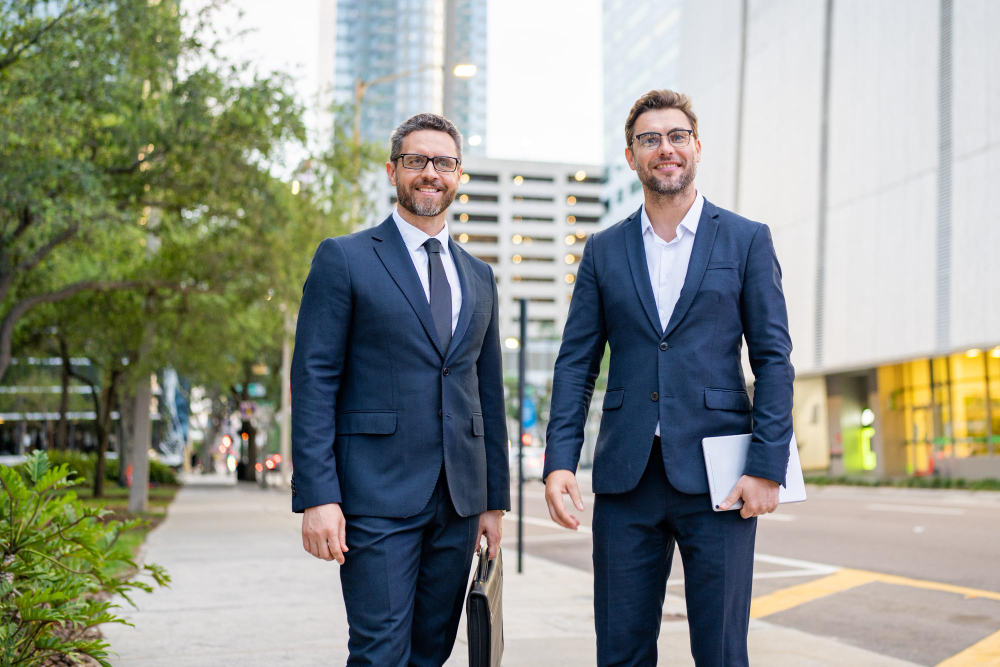
What Stayed the Same
Banking. Finance. Law. Government. These sectors have barely budged.
You walk into a bank in Dubai and you see ties. You see full suits. You see people who understand formal dress.
This isn't changing. These are client-facing industries where appearance signals competence. A banker in Dubai wearing a "creative outfit" isn't making a statement. They're not getting hired.
So if you're in banking, law, or government: wear a proper suit. Full suit. Tie. Dark colors. This hasn't changed and probably won't for another decade.
Real estate is similar. You're showing properties, meeting clients, making deals. You dress formally.
Consulting: formal. Insurance: formal. Government relations: formal.
These haven't changed.
What Actually Changed
Tech has completely changed. Oil and gas companies are shifting. Real estate is loosening up slightly. Startups were always loose and now they're even looser.
In tech, you can wear dress trousers and a nice shirt. No tie. No jacket required. If you show up to a tech startup in a full suit, you look uncomfortable.
This is real. We're seeing clients come in saying: "I got hired at a tech company. Do I even need a suit?" Answer: not every day, but one good suit for client meetings is smart.
Oil and gas companies (who are adapting to energy transition) are dressing younger and less formally. We're seeing more people in blazers and dress trousers without full suits.
Real estate brokers used to require full suits. Now? Depends on the brokerage. Luxury property brokers: still formal. Mid-market brokers: more relaxed.
The Unwritten Rules
The baseline rule is still: dress one tier more formally than you think you need to.
If you're meeting a client: full suit. If you're in-house with your team: can be slightly less formal. If you're new to a company: definitely dress more formally. After you've been somewhere a year, you can read the culture better.
For most professional industries in Dubai, "business formal" is still the expectation. That means suit and tie. But the definition of suit is loosening.
You used to have to have a full three-piece. Now: suit and shirt works. The tie depends on the situation.
Industry-by-Industry (2026)
Banking/Finance: Suit and tie, dark colors, white or light blue shirts. No changes. Dress like it's 1990. That's the vibe.
Law: Same. Formal. Full suit. If anything, law is getting more formal, not less.
Consulting: Depends on the firm. Big firms (Deloitte, McKinsey): full suit. Smaller consulting firms: might be blazer + trousers. Know your firm.
Tech: Dress trousers, nice shirt, optional blazer. Tie is unusual. Full suit means you don't understand the culture.
Real estate: Luxury properties—full suit. Mid-market—blazer + trousers. Brokers focused on volume—could be less formal.
Oil & Gas: Transitioning. Old guard: full suit. New people: blazer + trousers becoming acceptable.
Government: Suit and tie. Formal dress codes are even more important in government.
Retail/Hospitality: Business casual or full suit depending on role. Manager-level: business casual. Executive-level: suit and tie.
Startups: Whatever. Honestly whatever. As long as you look like you took 30 seconds to get ready, it's fine.
The Cost Equation for Young Professionals
You're 25, just graduated, starting your first job in Dubai. You don't need 10 suits.
You need:
One full suit for client meetings and important presentations. 4,000-5,000 AED bespoke or 5,000-8,000 AED luxury brand.
Three dress shirts (white, light blue, subtle pattern). 200-400 AED each bespoke.
One or two blazers for business casual days. 3,000-4,000 AED each.
Dress trousers in navy and grey. 2,000-3,000 AED each in bespoke.
Total investment: 17,000-25,000 AED. This lasts 2-3 years. You can build on it once you're comfortable.
Rather than purchasing multiple low-quality garments, many professionals begin with custom suits in Dubai and gradually build a complete wardrobe.
Dressing for Your Industry While Personal Branding
Here's the tension: you want to stand out, but you also have to fit in.
The solution: dress within your industry's norms, but do it in the best version of those norms.
You're in banking? Wear a suit. Wear the best suit. The fit will stand out. The quality will stand out.
You're in tech? Wear dress trousers and a shirt. Make sure they're fitted well and good quality.
You're not trying to reinvent the dress code. You're trying to be the sharpest person in the dress code.
Dressing for Promotion
If you want to move up, dress like the level above you.
If you're an analyst and you want to be a manager, start dressing like a manager at your company.
If you're a manager and you want to be director-level, notice what directors wear and dress like that.
This isn't manipulation. It's professionalism. You're signaling that you're ready for the next level.
In banking, that might mean your suit is slightly more expensive or more tailored. In tech, it might mean your shirt is slightly nicer or you actually wear a blazer to meetings.
Small signals. But they work.
The Remote Work Impact
Post-pandemic, Dubai has some remote work. Not as much as other cities, but some.
This has slightly loosened dress codes. If you're on Zoom, nobody cares what your pants are. So business casual (shirt + blazer, no tie, no full suit) is acceptable for some roles.
But here's the thing: the minute you're back in the office or meeting a client, the dress code reverts. So you still need proper suits.
Remote work hasn't fundamentally changed office dress codes in Dubai. It's just made the dress code more flexible on remote days.
FAQs
1. Does House of Tailors create business suits tailored to different industries in Dubai?
Yes. House of Tailors works with professionals across banking, finance, law, real estate, technology, consulting, and entrepreneurship. We tailor each garment based on industry expectations, workplace culture, and how the suit will be worn day-to-day.
2. What is the best first suit to invest in for a young professional in Dubai?
For most professionals starting their careers, we recommend a versatile navy or charcoal suit. These colours work across meetings, presentations, networking events, and formal business settings, making them a practical foundation for a professional wardrobe.
3. Can House of Tailors help me build a complete business wardrobe, not just a suit?
Absolutely. In addition to custom suits in Dubai, we offer wardrobe consultations covering blazers, shirts, trousers, and formalwear, helping clients build a wardrobe that aligns with their industry and career goals.
4. How does House of Tailors approach business dressing for professionals in more relaxed industries like technology or startups?
We focus on creating garments that suit the environment while maintaining a polished appearance. This may include tailored blazers, lightweight trousers, or versatile separates that work within modern business-casual dress codes.
5. Can House of Tailors assist professionals who want to improve their executive presence through tailoring?
Yes. Many clients use bespoke tailoring in Dubai as part of their professional development. We help create garments that project confidence, credibility, and consistency while remaining appropriate for their industry and level of seniority.