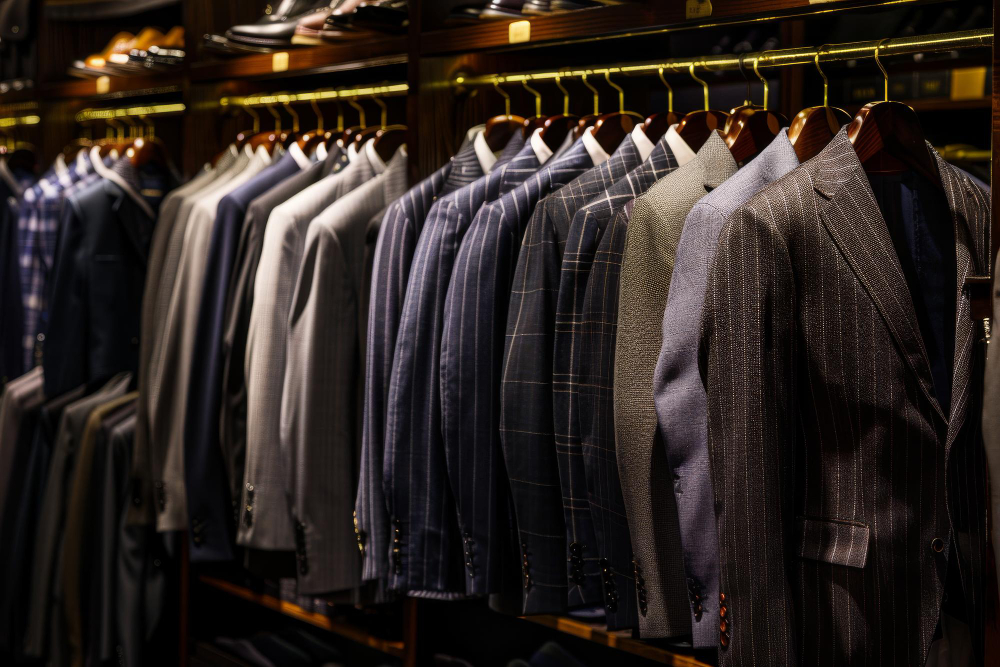
For decades, tailoring has been judged on two things—fabric and fit. The quality of the cloth and how well a garment sits on the body were seen as the defining markers of a good suit.
That standard no longer holds on its own.
Today, especially in a market like the UAE, where expectations are higher and clients are more informed, a tailoring brand is evaluated on something far broader. Fabric and fit are still essential—but they are no longer enough to differentiate.
What defines a tailoring brand today is how well it understands the client, how consistently it delivers, and how the entire experience is structured from start to finish.
1. Consistency Over One-Time Excellence
Anyone can deliver a good suit once.
What sets a serious tailoring brand apart is whether that standard can be repeated—across multiple orders, different fabrics, and over time.
Clients who invest in bespoke tailoring in Dubai are not looking for a single successful outcome. They are looking for reliability. They want to know that the second, third, and fifth garment will meet the same standard as the first.
Consistency is what builds trust—and trust is what turns a transaction into a long-term relationship.
2. Understanding the Client Beyond Measurements
Measurements capture dimensions. They don’t capture behaviour.
A well-built garment considers:
- How a client stands and moves
- Their daily environment (office, travel, events)
- Their tolerance for structure vs flexibility
- How often the garment will be worn
This is where many custom suits in Dubai fall short. The process stops at numbers, rather than extending into understanding.
A strong tailoring brand builds a profile over time—refining fit, adjusting preferences, and anticipating needs without having to start from zero each time.
3. The Structure Behind the Product
Most clients see the final garment. Very few see what goes into producing it.
Pattern drafting, construction choices, fittings, and adjustments determine whether a suit simply looks correct—or actually feels right over extended wear.
This is why conversations around canvas vs fused suits and construction methods matter. Not as technical jargon, but as decisions that directly affect durability, shape retention, and comfort.
A tailoring brand today is defined by how seriously it approaches what happens beneath the surface.
4. The Experience Is Part of the Product
The environment in which a suit is created has become just as important as the suit itself.
Clients expect:
- Clear, structured consultations
- Efficient communication
- Transparency on timelines
- Flexibility in how and where services are delivered
The growth of home visit tailoring in Dubai reflects this shift. Convenience is no longer seen as an add-on—it is becoming part of what defines a premium service.
A tailoring brand is now judged not only by the outcome, but by how smooth and considered the process feels from start to finish.
5. Relevance to the Market It Serves
Tailoring cannot operate in isolation from its environment.
In the UAE:
- Climate affects fabric selection and construction
- Work culture influences how formal or relaxed garments need to be
- Social settings often require versatility within a single outfit
This is why lightweight suit fabric in the UAE and breathable suits for hot weather are not niche considerations—they are fundamental.
A tailoring brand that fails to adapt to its environment produces garments that may look good initially, but struggle in real use.
6. From Product to Wardrobe Thinking
The shift today is not towards buying more suits—but towards building a more effective wardrobe.
Clients are moving away from one-off purchases and towards:
- Fewer garments with clearer roles
- Pieces that work across multiple settings
- Consistency in fit and structure across their wardrobe
This is where a tailoring brand moves beyond selling garments and starts shaping how a client dresses over time.
7. Long-Term Value Over Immediate Appeal
A suit should not be evaluated on how it looks on day one alone.
It should be assessed on:
- How well it holds its shape after repeated wear
- How it performs across long days
- Whether it continues to fit and function over time
In this sense, tailoring becomes less about immediate visual impact and more about long-term performance.
Final Thought
Fabric and fit remain essential—but they are now the baseline, not the differentiator.
What defines a tailoring brand today is its ability to deliver consistency, understand the client beyond measurements, build garments with structural integrity, and provide an experience that reflects how people live and work.
In a competitive market like Dubai, where access to custom suits in Dubai and bespoke tailoring in Dubai is growing, the brands that stand out are not those that simply produce garments, but those that build lasting standards clients can rely on.